
The Wisdom Within: Cultivating Inner Awareness During Perimenopause and Menopause
Viviane Wolfe | APR 1, 2024
article
awareness
wisdom
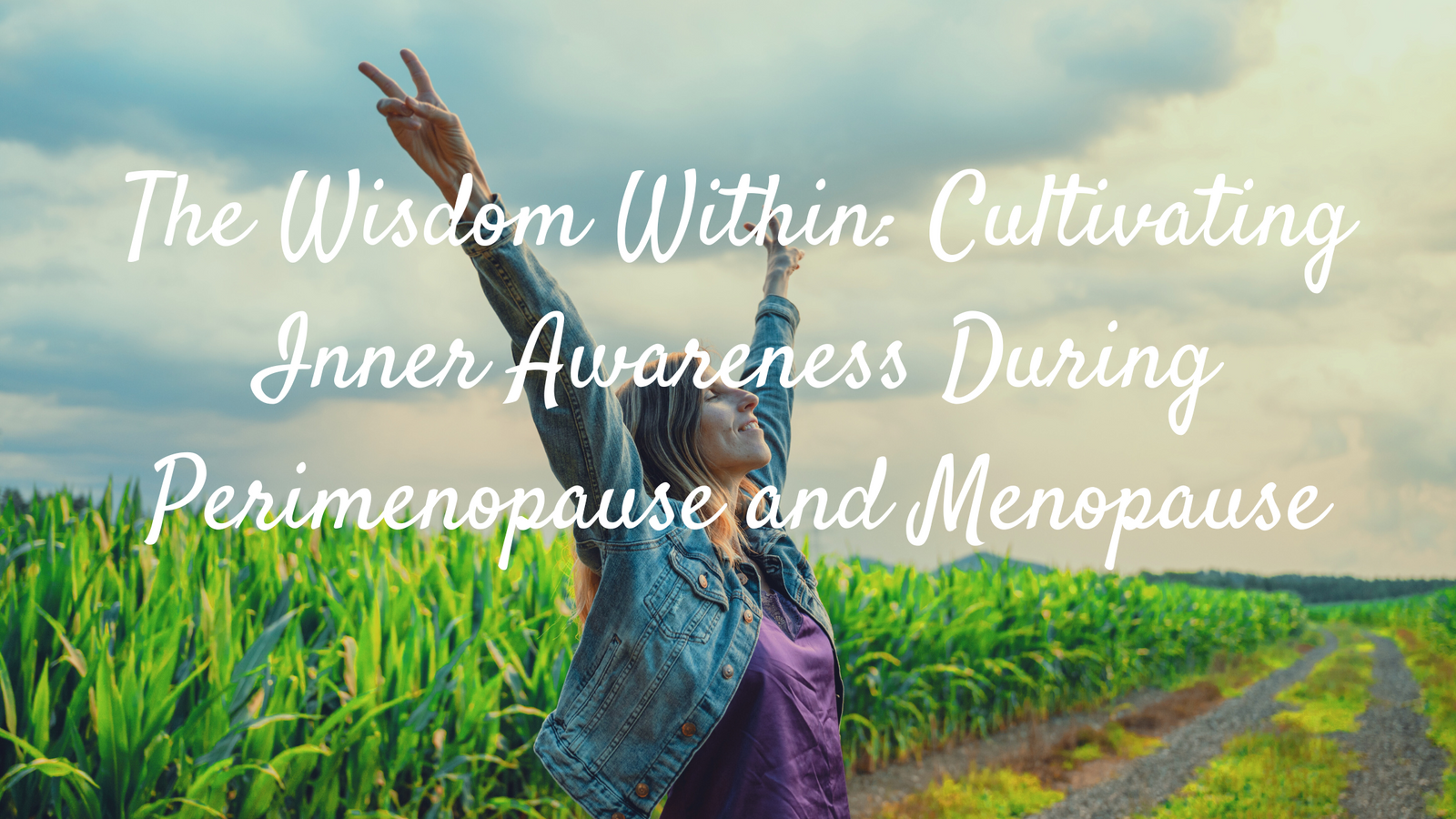
I have Gray Hairs, do you?
As I write this entry, I am thinking about the “gray hair watch” I am on currently. Each time I wash my face, I examine my hairline to see if I detect more gray hairs (as if there will ever be fewer now). I both love and hate those silver wires that pop out of my head. They have a lovely shine to them, but they are very unruly, twisting this way and that with no concern for laying with the other hairs in some kind of calm state of “done.”
This is just one of the many changes that are happening as I move through perimenopause into menopause. It’s a natural stage and season of life for most women, and we can expect to experience it if we reach the age 40 and beyond. And while it can be a source of shame and pain for many women, it can also be a beautiful transformation into the WISE woman we all admire and cherish.
This hair examination is just a small part of the practice of cultivating awareness that helps us to feel mor connected and embodied in a time that feels overwhelming and strange. Awareness is our best tool in perimenopause and menopause, to help us notice the changes that are happening and to find the support we need when we need it. This awareness extends outwardly AND inwardly, helping us to navigate both the physical changes we experience, and the mental and emotional ones too.
Menopausal Mysteries
Perimenopause is the time leading up to menopause, when the menstrual cycle starts to decline, and the symptoms we often hear about begin to show up. Night sweats, hot flashes, migraines, digestive problems, skin changes, energy fluctuations, mood swings, all of that, begins before we reach the threshold of menopause.
Threshold? That’s right. Menopause itself is not a period of life, but really just the point we cross over. The moment where you have had no menstrual period for 12 months, that anniversary marks your menopause. Everything leading up to that is perimenopause and everything after is post-menopause. Symptoms do not necessarily end with menopause and can often accompany you for years into post-menopause.
With good self care, self love, and most importantly, self awareness, you can make your way through this turbulent season with more ease and acceptance, and learn about yourself in a new and unique way that will support you in your latter years.
The Power of Inner Awareness
In yoga, we work towards cultivating a strong inner awareness, an inner knowing, to guide us through the usual ebb and flow of life. Mindfulness is a practice to help us stay in the moment so that we are less troubled by the stress and tension that life can throw at us. In the adventure of menopause, this inner awareness is even more important, guiding us through the hot flashes, remembering they will pass, and through the brain fog as we remember that we can breathe our way into more clarity.
As you become more attuned to your body, thoughts, and emotions, the better you can meet the challenges of the rise and fall of hormonal influences within you. You learn how long your symptoms last, what triggers them, what soothes them, and how to stay energized and connected throughout your day. You know that you will probably need this support on this day, you remember that symptoms flare when the weather changes, and so on. That inner awareness becomes your superpower, guiding you and supporting you so that you can spend more time focusing on what is important.
Practical Strategies for Cultivating Inner Awareness
So how do you build this sense of inner awareness? With practice, of course! Here are a few practices to consider top help you feel more aware and mindful:
- Mindfulness meditation–Vipassana meditation technique is a simple and effective way to begin the process of observing without judgment or action. Try this: Sit upright on a chair or on the floor with legs crossed. Close your eyes and bring your focus to your breath. Follow the air in and follow the air out. Feel your navel rise and fall. As you breathe in, silently say “navel rising” and as you breathe out, “navel falling.” Continue this for 5 minutes. The part I love about this practice is that when you are distracted (which is natural), you make it part of the practice. If you get an itch, you silently say “itching, itching” and then as soon as you can, return to the observation of the breath. If a noise distracts you, say “listening, listening” and then return. If your mind wanders, name it and then return. Again and again. And then after five minutes, just let it go.
- Body Scan practice–This is a beautiful and simple technique to connect to your physical experience. IN any position (sitting, laying down, etc) close your eyes and start to observe your feet. Say the name of the body part and notice any sensations that arise as you observe the body part. Then move to the next–ankle, calf, knee, etc, until you arrive at the crown of the head. As you move awareness through the body, encourage the body to relax, keep the breath gentle and soft. Take as long as you like with this.
- Lastly, I want to recommend journaling daily. When you write your experiences, especially in perimenopause and menopause, you build your awareness of the cycles and routines of your life. Journal about your symptoms, your sleep quality, the food you eat, whatever you think might be useful. Also write out your thoughts, feelings, beliefs. As you write them out, you can start to observe them from an outside perspective, allowing you to not get so caught up in the story of your citta vritti, inner tornado, as I like to call it.
I have a whole toolbox of awareness techniques that may be useful to you, so if you’d like to talk more about that, consider signing up for a free yoga therapy consultation.
I mean, you might as well. Right?
Why do all this? Why should you change up your routines and self care rituals to include these practices? Why does awareness matter? Well, the simple answer is that it helps you feel better through menopause.
When you are aware, you can take action with purpose. That is the simple truth. With a journal of observations, you can have deeper conversations with your medical provider about your symptoms to get better care. You can apply the correct types of fitness and nutrition to fit your unique experiences. You can get more sleep, have less pain, less anxiety, feel more even-keeled more of the time, and spend less time in brain fog.
Awareness is one of the reasons why it is recommended to keep a food diary. It’s not meant to be a source of shame, but of knowing more accurately what is going into the body, where it comes from, and how it affects your energy, your sleep, your mood, etc. Many times people think they are getting enough ____ (water, sleep, protein, etc.) and when they begin tracking, they often learn that adjustments are needed to meet the goals they have.
For me, I struggle with sleep. I have always had a troubled relationship with sleep, even when I was very young. And when I started tracking my sleep, I could see which days and which triggers kept me from sleeping as well as I would like. It gave me the power to create routines and if/then plans to help me get the right kind of and amount of sleep I need.
There’s a lot going on right now.
The season and adventure of menopause is a lot. I mean, not just the symptoms themselves, but this whole management of it can feel like a real drain. But it doesn’t have to be. With some inner awareness and mindfulness, you can begin to apply the right energy and focus to the right places so that your menopause journey is easier and less stressful.
So give yourself some grace. Start small, start with a short meditation practice of observation and then journal about what’s coming up for you. Do this for a few weeks, and just notice if there feels like you have clarity, a little more compassion, and some resilience.
That’s it from me. Thank you so much for reading.
Mwah! 😘 Take good care of yourself!
Viviane
P.S. Join the Yoga Sister Circle and get future articles like this a day early, PLUS a calendar of yoga events, free classes, sneak peaks and more! Just click "SUBSCRIBE" at the top of the page to get started.
Viviane Wolfe | APR 1, 2024
Share this blog post

Zen-X Yoga | Viviane Wolfe, C-IAYT
CONTACT
© 2026 Zen-X Yoga | Viviane Wolfe, C-IAYT