
Lesson 27 | Tension-Release Yoga: Let Go of Stress in Your Neck, Shoulders & Hips
Viviane Wolfe | JUL 21, 2025
somatic healing
pelvic health
Lesson 27 | Tension-Release Yoga: Let Go of Stress in Your Neck, Shoulders & Hips
Hello, my friends! Dealing with the accumulated stress and worry that seems to reside in your body —your neck, shoulders, and even your hips —is a common experience for many of us in Generation X. The demands of modern life can often leave us feeling tight, overwhelmed, and disconnected from the present moment.
But what if a simple, accessible yoga practice could help you reset? This isn't about a high-intensity workout; it's about coming back to your center and finding ease.
Here is your educational and compassionate guide to releasing stress where it occurs.
🧘♀️ The Connection: How Worry Accumulates in Your Body
Worry is often about imagining future scenarios and trying to "plan" for them. This mental effort creates a constant state of low-level tension. Over time, this chronic stress manifests physically:
Tight Shoulders and Neck: We literally "carry the weight of the world" or brace ourselves against future unknowns.
Constricted Breathing: Stress can cause your breath to become shallow and fast, perpetuating a fight-or-flight response.
Hip Tension: The hips are often referred to as a "storage unit" for emotions, and tension in this area can limit mobility and groundedness.
Yoga therapy offers a path back to ease by consciously addressing these physical patterns. By bringing awareness to your body in the present moment, you interrupt the cycle of worry.
✨ A Simple Yoga Therapy Sequence for Stress Relief (Gen X Focus)
This sequence is designed to be gentle, performed while seated, and can be done on a mat or even in a chair—wherever you can take a moment for yourself.
1. Checking In: Cultivating Present Moment Awareness
Before any movement, take a few moments to sit comfortably (on a folded blanket, pillow, or chair) with your gaze soft or your eyes closed. This is your foundation for releasing stress.
Scan Your Body: Notice without judgment. Is your body warm or cool? Where do you feel tightness? Where is there spaciousness?
Observe Your Breath: Is it shallow or deep? Fast or slow? Even or uneven? Observing your breath is a powerful way to anchor yourself in the present.
2. Shoulder and Neck Release
These simple movements are incredibly effective for the upper-body tension that Gen X often holds.
Shoulder Circles: Gently circle your shoulders, taking them up toward your ears and back down, connecting the movement to your breath. Don't worry about size or speed; just feel the movement. Reverse the direction.
Gentle Neck Stretch:
Exhale: Dip your right ear toward your right shoulder. Let your left shoulder relax, breathing into the space on the left side of your neck.
Exhale: Roll your head forward, bringing your chin to your chest. Pause and send your breath to the back of your neck.
Inhale: Lift your chin, gazing up as high as is comfortable.
Repeat on the left side (left ear to left shoulder).
3. Spinal Twist and Hip Opening
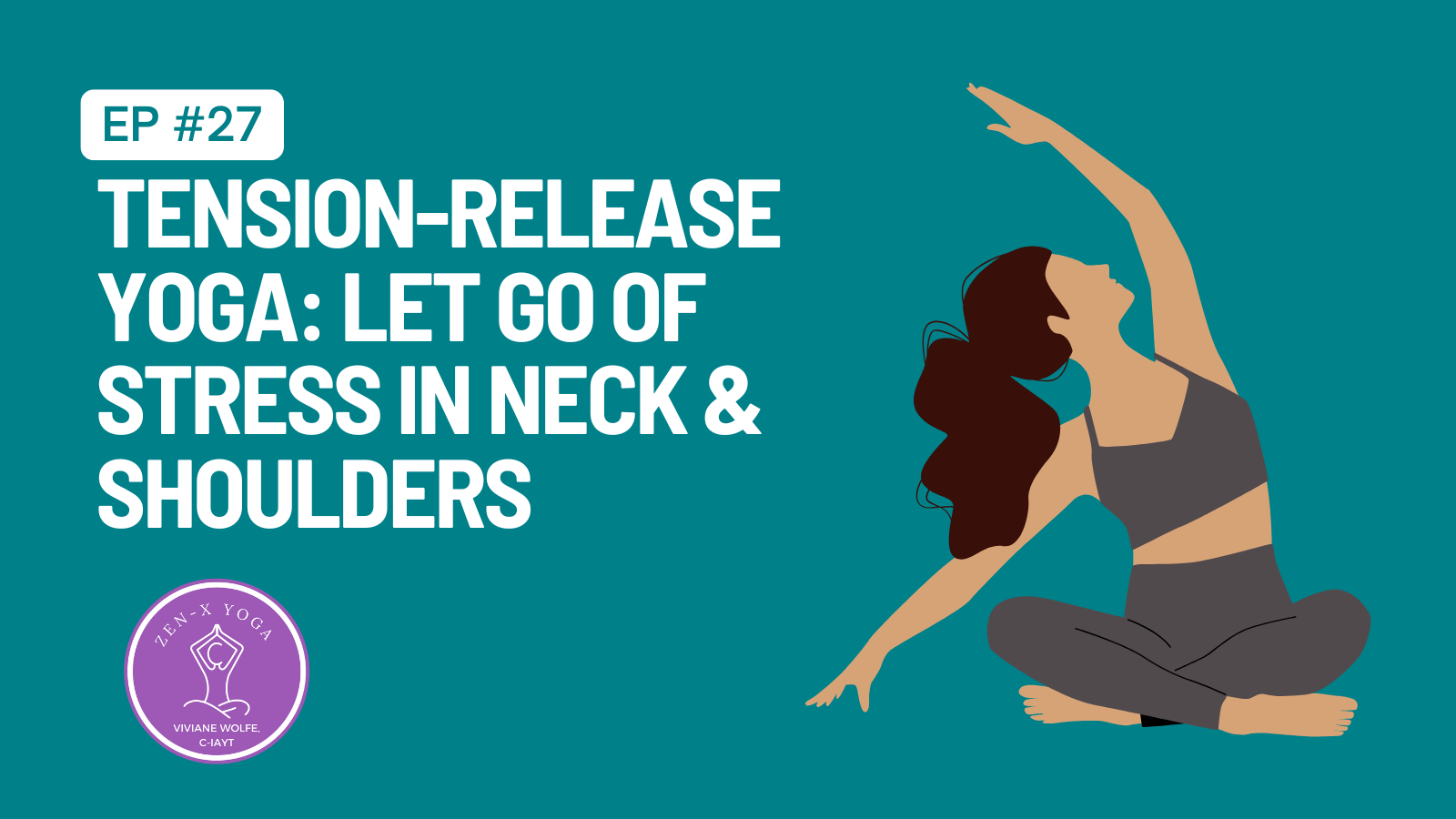
The Deer Pose twist gently opens the hips in both internal and external rotation while releasing tension along the spine—a perfect two-in-one for relieving stored stress.
Deer Pose Setup: Sit with your right leg bent in front (external rotation) and your left leg bent out to the side (internal rotation), foot pointing behind you.
Gentle Twist: Place your left hand on your right knee and your right hand behind you. Inhale to lengthen your spine, and Exhale to gently twist your heart and gaze to the right.
Repeat: Inhale back to center, and exhale to twist again. After three rounds, gently release and windshield wiper your knees side to side to loosen up.
Switch Sides: Repeat the Deer Pose twist with your left leg in front and your right leg to the side.
4. The Deep Reset: Complete Yogic Breathing
Lying down with a blanket or cushion under the lower rib cage can help you fully engage your diaphragm.
Deep Yogic Breath: Inhale deeply, imagining you are filling your entire inner space, all the way to your belly. As you Exhale, gently squeeze the air out, activating your abdominals to help your diaphragm lift.
Repeat this complete, deep breath for 3–5 rounds, letting go of all the air on the exhale.
Rest: Release the effort and simply let your body breathe itself. Notice how the rhythm of your breath has changed.
💖 Continuing Your Yoga Therapy Journey
This short practice is a vital reset button you can push anytime you feel worry or tension accumulating. By regularly checking in with your body—before and after a practice—you learn how to track your progress and understand what truly brings you peace.
How do you feel after this practice compared to before? Share your experience in the comments below! This feedback is part of how we learn and grow in our yoga practice.
Ready to dive deeper? Check out the link below to join the Zen X Yoga Circle community for early access to videos, free monthly class passes, and exclusive content developed for your ongoing yoga therapy journey.
Click here to get started and find a yoga practice that is truly yours.
Until next time, take good care of yourself.
–Viviane
Viviane Wolfe | JUL 21, 2025
Share this blog post

Zen-X Yoga | Viviane Wolfe, C-IAYT
CONTACT
© 2026 Zen-X Yoga | Viviane Wolfe, C-IAYT